ai is taking over healthcare podcasts and it's actually fine
Everyone is tired of the AI hype cycle, but niche B2B podcasts are actually using it to make complex topics like healthcare tech humans-only again.
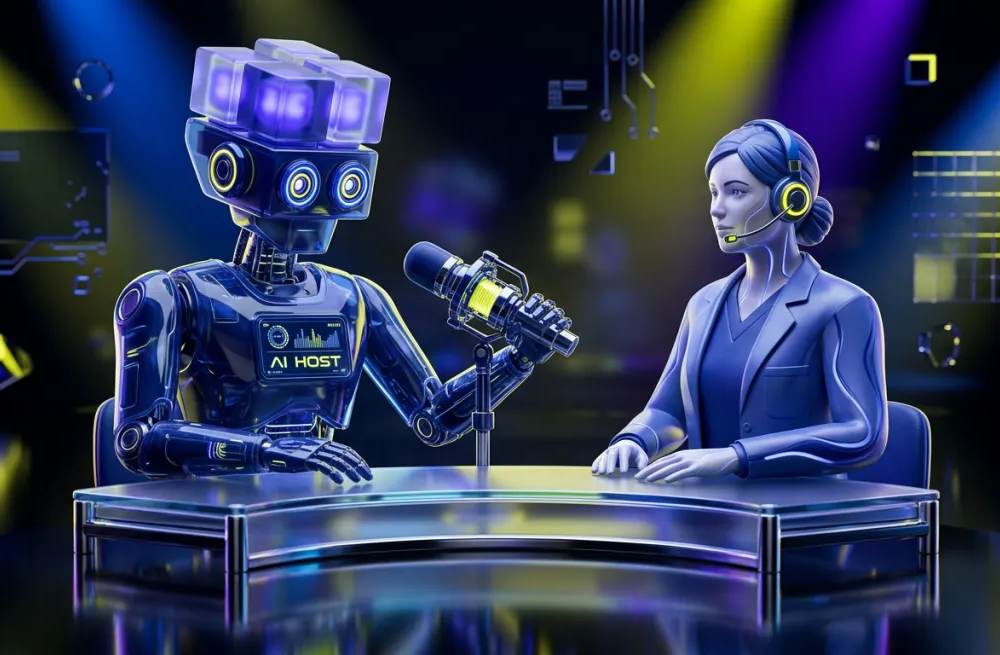
You can tell when a B2B podcast has been made by a committee because it sounds like a LinkedIn post that’s been stretched out over forty minutes. It’s dry. It’s safe. It is, quite frankly, a waste of everyone’s time. But then you see something like the 'Making Disease Optional' series and you realize that the subject matter - AI in healthcare - is actually forcing people to get better at the actual craft of audio. It’s a bit of a paradox. We’re using more technology to talk about technology, but the end result is something that feels more human because it’s finally tackling stuff that matters.
If you’re a founder or a marketing lead, you’ve probably spent the last year feeling like you should be 'doing more AI.' It’s a boring pressure. But in the world of niche podcasting, specifically in sectors like health tech where the science is dense and the stakes are literally life and death, AI isn’t just a buzzword. It’s becoming the engine that allows podcasters to take a messy, complicated topic and turn it into something someone actually wants to listen to on their commute.
the density problem
The hardest thing about B2B content is the density. You’re trying to explain how a machine learning model identifies a tumor faster than a radiologist, but you also need to make it sound compelling. Most people fail at this. They lean into the jargon and they lose the listener by the three-minute mark. Honestly, it’s why most B2B podcasts have about twelve listeners and ten of them work for the company.
What’s happening now with shows like 'Making Disease Optional' is that they’re using AI to bridge the gap between 'this is very important' and 'this is very boring.' It’s about synthesis. Using AI tools to help research, script, and even edit means the producers can focus on the narrative arc rather than getting bogged down in the technical minutiae. It lets you cover more ground. It lets you be more ambitious with your guests because you can actually keep up with the speed they're moving at. It sort of levels the playing field for smaller teams who have big ideas but don't have a BBC-sized production budget.
why narrow beats broad
There is this weird instinct in marketing to try and appeal to everyone. People think if they make a podcast about 'Business Growth' they’ll get a huge audience. They won't. They'll get nobody. The success of these healthcare-focused AI shows proves that the more specific you are, the more room you have to be interesting. You aren't talking to everyone. You’re talking to the people who care about how silicon valley is trying to rewrite the human genome. That’s a specific person. They have specific questions. They don't want a surface-level chat - they want the grit.
And because these shows are so niche, they have to be high quality. You can't fake it when your audience is smarter than you. This is where AI-driven production is kind of a lifesaver. It allows for better sound design, tighter editing, and more nuanced research. It makes the podcast feel like a premium product. If you’re a B2B brand and your podcast sounds like it was recorded on a potato in a hallway, it doesn't matter how 'innovative' your product is. Your content is your brand. People forget that. They think the content is just a trailer for the brand, but it isn’t. It’s the thing itself.
the bit nobody wants to admit
Here is the thing about AI in content production: a lot of it is still a bit rubbish. If you use it to write your scripts, it will sound like a robot wrote them. Because it did. The trick - and the reason these healthcare podcasts are actually succeeding - is that they use AI for the heavy lifting so the humans can do the creative stuff. They use it to transcribe fifteen hours of interviews so a human writer can find the three minutes that actually tell a story. They use it to clean up the audio so you don't hear the guest's air conditioning unit in the background.
It’s about removing friction. Every bit of friction you remove between an idea and a listener’s ear is a win. In a field like healthcare, where the information is changing every single hour, you need that speed. If your production process takes six weeks, your episode is obsolete before it even hits Spotify. AI isn’t replacing the host - it’s just making sure the host isn’t talking about yesterday’s news.
getting actually practical
If you're looking at this from a growth perspective, you've got to stop thinking about a podcast as just an audio file. It’s a data set. When you produce a show like 'Making Disease Optional', you’re creating a massive amount of intellectual property. You can use AI to slice that up into white papers, LinkedIn clips, newsletters, and blog posts. It’s like a content multiplier. But you have to start with the high-quality audio. If the source material is weak, the AI-generated spin-offs will be even weaker. You can't polish a bad interview, no matter how good your prompts are.
And you probably don't need to overthink it. Most brands wait until they have a 'perfect' strategy before they start. By that time, the conversation has moved on. The beauty of the current tech is that you can start small, use the tools to keep the quality high, and iterate as you go. It’s not about being the first to use a new tool. It’s about using the tool to be the first to say something interesting. Most people get that the wrong way round. They get so excited about the 'how' that they forget the 'why'. The 'why' is always the person on the other end of the headphones.
We’re moving into an era where every company is going to have to be a media company, and that sounds like a nightmare. It sort of is. But if you actually have something to say - if you’re tackling something as big as the future of human health - then the tech finally exists to help you say it properly. Just don't let the tools take the personality out of it. People listen to podcasts for the perspective, not the processing power.