the death of the podcast hobbyist
Podcasting just hit the 55% mark in the US. It’s not an emerging medium anymore - it’s infrastructure. Here is what that means for your B2B strategy.
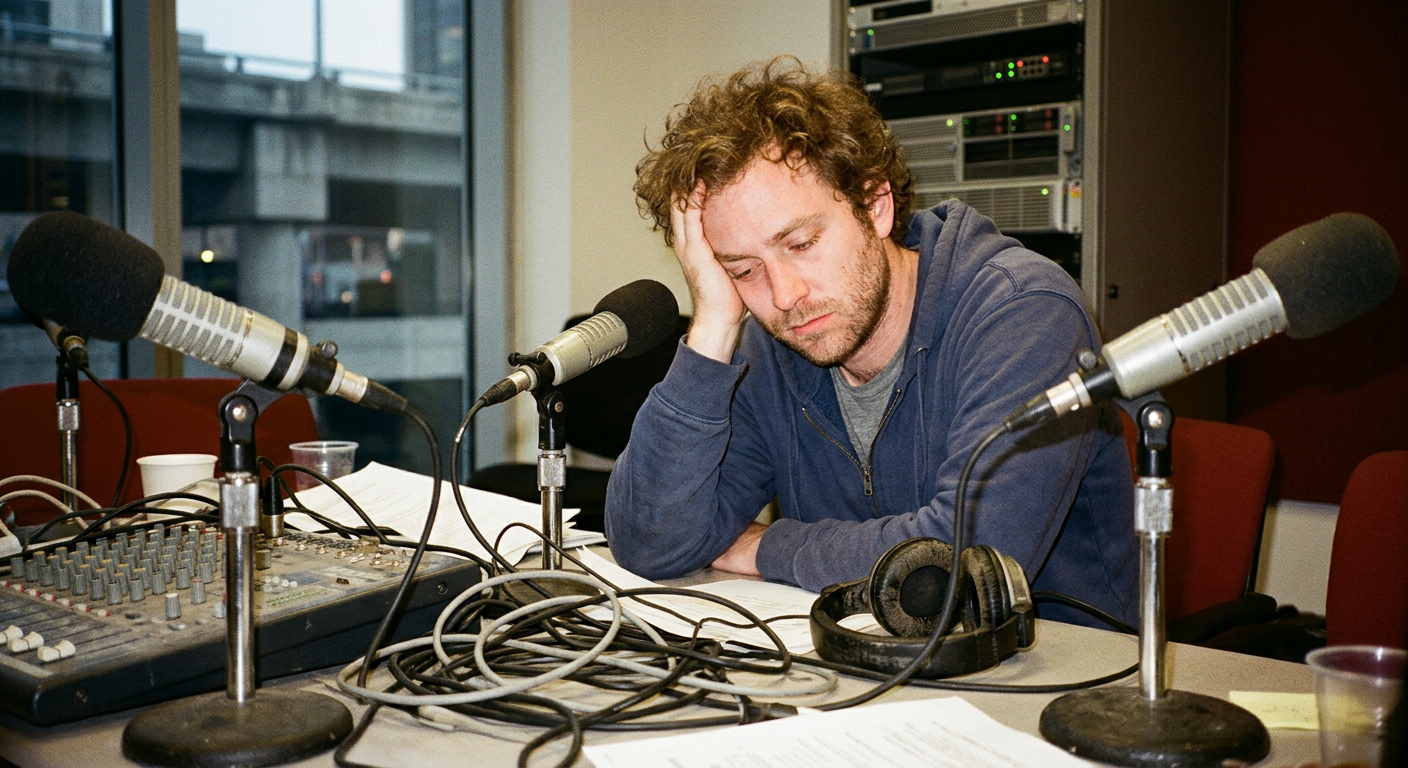
I saw a stat the other day that feels like a bit of a turning point. Apparently, monthly podcast listenership in the US has officially ticked over the 55% mark. It sounds like one of those boring industry milestones that people post on LinkedIn with a rocket emoji, but it actually sucks for most people trying to start a show right now.
When a medium hits that kind of saturation, the rules of the game don't just change. They kind of break. We aren't in the early-adopter phase anymore where you can just turn on a mic, talk about 'synergy' or whatever for forty minutes, and expect people to find you because there aren't many other options. We’ve reached the point where podcasting is basically infrastructure. It’s like email or websites. Everyone has one, everyone uses it, and most of it is remarkably average.
If you’re a B2B marketer or a founder looking at these numbers and thinking it’s time to hop on the trend, you’re about three years late to the trend part. Which is fine. Actually, it’s better than fine. But you have to stop treating your show like a side project or a 'test and learn' experiment. If more than half the population is listening to podcasts, they have officially developed a palate. They can tell when you're using a cheap USB mic in a room that echoes like a cathedral. They can tell when you haven't prepared. And they will definitely tell when your show is just a thinly veiled sales pitch disguised as an interview series.
why the 'audio-only' dream is dying
The thing about more than half of a population doing something is that they don't all do it the same way. We used to think of podcasts as something you did while doing something else - driving, doing the dishes, staring blankly at a gym wall. But the data shows that as podcasts become the mainstream default, the way we consume them has shifted toward video. People aren't just listening; they're watching. They’re watching on YouTube while they eat lunch or having it on a second monitor while they pretend to work.
If you are still producing a show that is just an MP3 file, you are essentially ignoring how people actually find things now. Discovery doesn't happen in the Apple Podcasts app. Nobody goes there to browse. They go there to listen to the show they already found on TikTok or LinkedIn or YouTube. By refusing to go mid-to-high fidelity with video, you’re basically building a shop in the middle of a forest and wondering why nobody is walking past the window.
And honestly, the 'video' part shouldn't just be a Zoom recording. We’ve all seen enough of those over the last few years to last a lifetime. If I see one more B2B podcast that is just two people in different cities with slightly lagging internet connections and grainy webcams, I might actually lose it. It feels cheap. Not 'scrappy startup' cheap, but 'we don't really care about your time' cheap.
the algorithm is your new boss
Now that we’ve hit the mainstream saturation phase, the platforms have taken over. It’s not about RSS feeds anymore. It’s about satisfying the gods of the algorithm. This is where most B2B shows fail. They produce one long episode, post it once, and then wonder why it got twelve downloads - eleven of which were from people in the company Slack channel.
Mainstream saturation means you are competing with everyone. Not just your direct competitors in the SaaS space or the consulting world. You are competing with Joe Rogan and Diary of a CEO and that one niche true crime show that everyone is obsessed with. Your audience has a finite amount of time. If you want a slice of that 55%, you have to earn it by being actually, genuinely interesting.
This means your production process has to be built for distribution from day one. You don't make a podcast and then 'cut it up' for social media. That’s backwards. You should be designing moments that work as sixty-second clips, then building an episode around them. It sounds a bit cynical, but it’s just the reality of how people consume media in 2026. Every episode needs a hook that works without context. If your guest says something profound but it takes them four minutes to get to the point, that's a failure of editing, not a failure of the guest.
the shift from growth to dominance
In the growth phase of a medium, you can win just by being there. In the saturation phase, you win by being better. Or by being more specific. Most B2B podcasts are too broad. They try to talk to 'leaders' or 'innovators.' That’s not a target audience; that’s a LinkedIn search filter. The 55% milestone tells us that even the most niche communities now have podcast listeners within them. You can afford to be weirdly specific. In fact, you kind of have to be.
I’ve noticed that the shows that actually move the needle for businesses right now aren't the ones trying to be the biggest in their category. They're the ones that feel like a private club. They use specific language, they tackle specific problems, and they don't spend the first ten minutes asking the guest for their 'origin story.' Genuinely, if I have to hear one more person talk about how they 'fell into' their career, I'm going to throw my phone in the Thames. Get to the stuff that matters. People are busy, and 55% of them have a million other shows they could be listening to instead of yours.
the production tax
There is a sort of 'production tax' that comes with mainstream maturity. Ten years ago, a podcast was a hobby. Five years ago, it was a marketing tactic. Now, it’s a brand asset. If your video quality is bad, it reflects on your product quality. It might not be fair, but it’s true. When people see a polished, multi-camera setup with good lighting and crisp audio, they subconsciously associate that with a company that has its act together. They think, 'if they put this much care into a podcast, their actual software/service must be incredible.'
On the flip side, a bad production makes you look like you’re struggling. It makes the company look like it’s chasing a trend it doesn't quite understand. It’s better to have no podcast than a bad one. Genuinely. A bad show is just a public record of your inability to execute at a high level.
So, we hit 55%. Great. The 'new medium' smell has officially worn off. Podcasting is just... media now. It’s part of the furniture. If you want to use it to grow your business, you have to treat it with the same respect you’d give a high-budget ad campaign or a keynote speech. The days of 'just hitting record' are over. And honestly, that's a good thing. It means the people who are actually willing to put in the work and make something worth watching are the only ones who are going to survive the saturation.
If you're still thinking about starting a show just because 'everyone else is doing it,' maybe don't. But if you're ready to actually make something that looks and sounds like it belongs in the mainstream, there has never been a bigger audience waiting for you.