the green podcasting myth and siemens’ dark design
Sustainability in podcasting is usually just a badge. Siemens is actually doing the work with 'dark design' workflows that cut energy by 30%.
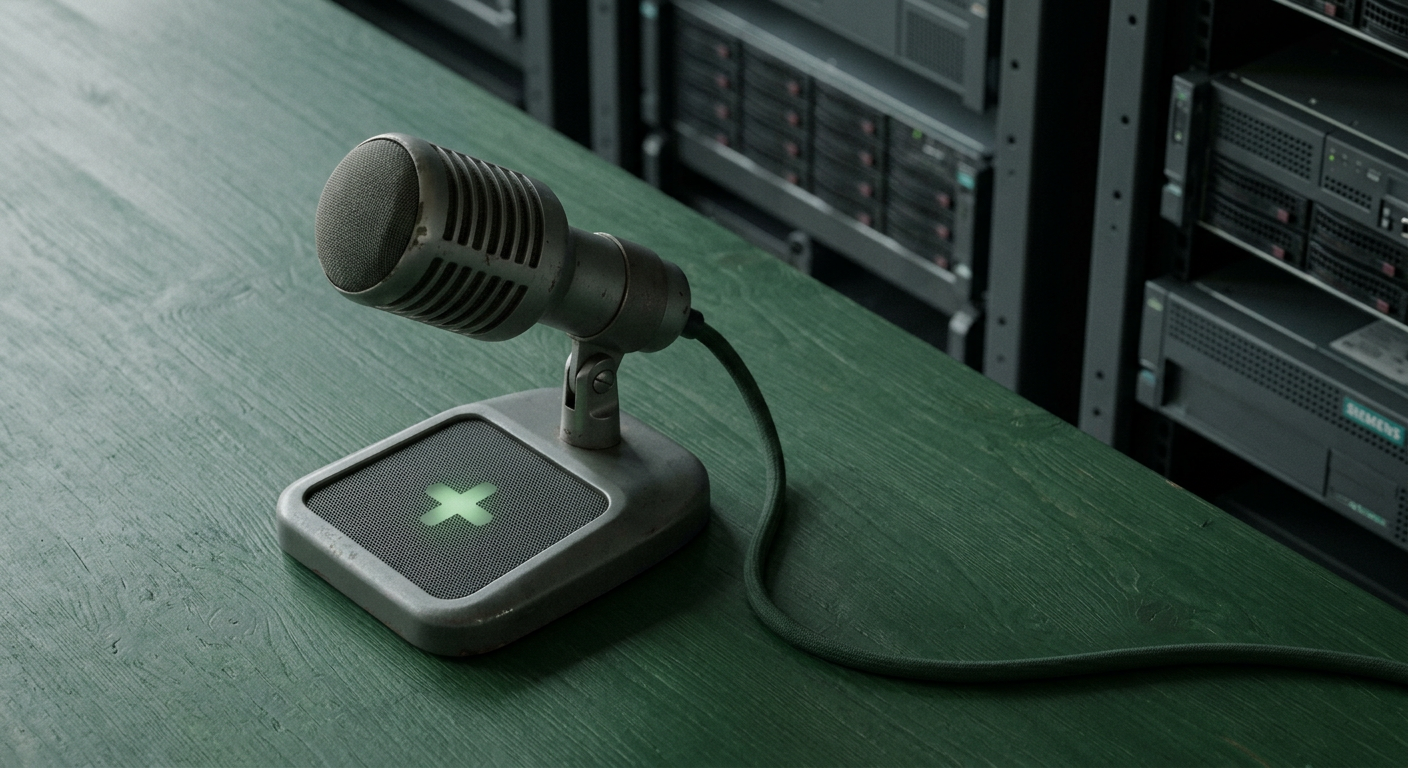
A lot of B2B podcasts feel like they were made in a wind tunnel. You know the ones. The audio is sterile, the guest sounds like they’re trapped in a tin can, and the whole thing feels like it cost about four pounds to produce. But because it's "digital," we all sort of tell ourselves it's sustainable. It’s paperless, right? It’s just bits and bytes. It can’t be that bad for the planet.The reality is that high-end video podcasting, especially when you’re doing it at scale, has a footprint. Large files moving across servers, AI processing power, remote recording platforms sucking up energy - it adds up. Most brands just ignore this because talking about carbon footprints in creative production feels like a buzzkill. But Siemens actually did something interesting with their Industry Forward show that most people completely missed. They’ve been playing with this thing called 'Designing in the Dark.'It sounds like a goth aesthetic choice, but it’s actually about using AI to simulate 'dark' design environments. They’re basically using digital twins - a concept usually reserved for massive factories or jet engines - to track the real-time carbon footprint of their production. It’s a bit obsessive. It’s definitely very Siemens. But they’ve managed to cut energy use in their remote recording by about 30%. In a world where every B2B brand is desperate to prove their ESG credentials without sounding like they’re reading from a teleprompter, this is actually quite a big deal.
why your podcast footprint actually matters
You probably think your 45-minute chat about SaaS go-to-market strategies isn't hurting anyone. And individually, it’s not. But when you look at how we produce content now - high-bitrate video, cloud-based editing, AI-driven transcription, and hosting - you’re looking at a huge amount of data processing. Honestly, most people just don't care. They want the lead gen. They want the brand awareness. They want the clip for LinkedIn that gets 500 likes.But the Siemens approach matters because it’s the first time a major player has admitted that the process of making content is just as important as the content itself. If you're a business leader claiming to be a leader in sustainability, but your marketing engine is incredibly inefficient and energy-heavy, there’s a gap there. A vibe shift is coming where 'how' you make things will be scrutinized as much as 'what' you make. Using digital twins to simulate production environments sounds like overkill until you realize it’s actually just good engineering applied to a medium that is usually quite messy.
the reality of dark design
The concept of 'Designing in the Dark' is about efficiency. It’s about minimizing the resources needed to get to the final result. In podcasting terms, this looks like optimizing the data paths. Instead of just throwing massive raw files around and letting a server in Oregon sweat it out, you’re using AI to predict the most efficient way to capture and process that audio. It’s kind of funny that we’ve reached a point where we need AI to help us save the planet from the energy used by other AI. But here we are. This specific workflow helps reduce the 'noise' in the production cycle. And no, I don’t mean the literal audio hiss. I mean the waste. The wasted time, the wasted storage, the unnecessary renders. Siemens is basically saying that if you can't measure the impact of your creative workflow, you aren't actually in control of it.
stop being performative about sustainability
Most B2B brands do the 'sustainable podcast' thing by mention it in an ad break or putting a little leaf icon on their cover art. It’s fine. It makes the marketing manager feel like they’ve done a good job. But it doesn't actually change anything. What Siemens is doing is genuinely hard. It requires integrating complex tech stacks and actually caring about the data. If you’re a mid-market B2B brand, you probably don't have a digital twin of your podcast studio. You probably shouldn't. It would be a weird waste of money. But you can take the logic. You can look at your production partner and ask how they handle data. Are they just using the most energy-intensive cloud tools because they’re easy? Or are they thinking about the longevity of the content? There is a specific kind of arrogance in thinking that digital content is 'free' for the environment. It isn't. And as we move into an era where AI is doing more of the heavy lifting in editing and distribution, those energy costs are only going up. You don't have to be a multi-national conglomerate to start thinking about this. You just have to stop assuming that 'digital' means 'clean.'
how to actually use this
Please don't go and tell your team to 'implement dark design' tomorrow. They’ll think you’ve joined a cult. Instead, just start looking at the friction in your production process. Friction usually equals waste.
- Look at your remote recording setups. Are you using tools that are over-engineered for what you actually need?
- Think about your storage. Do you need five versions of the same file sitting on a high-speed server forever?
- Ask your production agency about their workflow efficiency. Not just their 'process' - their actual tech efficiency.