Corporate Training Videos: The Production Guide for 2026
The formats, honest budgets and measurement that make corporate training videos work, and how to avoid compliance theatre nobody watches.
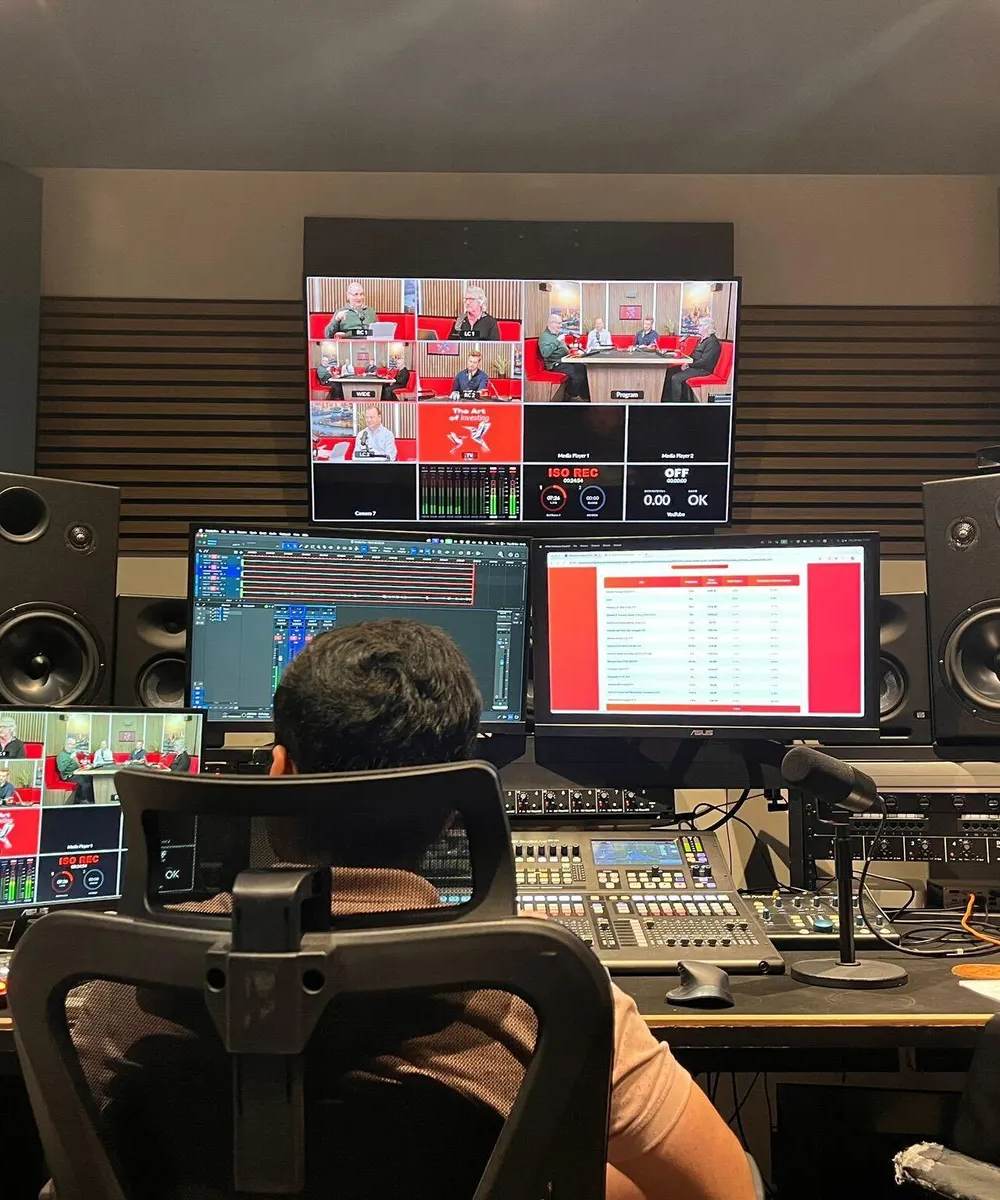
Most corporate training videos exist because a document failed first. The policy nobody read, the onboarding deck nobody finished, the process guide that answered every question except the one people actually had. Video gets commissioned as the fix, and then, too often, it gets produced with exactly the same thinking that sank the PDF, just at ten times the cost.
This guide covers what works: which of the six training video formats fits which job, what production genuinely costs in the UK market, how to run the process without it consuming a quarter, and how to tell whether anyone's behaviour actually changed afterwards. Training video sits within the wider discipline of corporate video production, and the same rule holds across all of it: production polish is worth nothing if the thinking underneath is wrong.
Why Video Beats Documents (and Where the Evidence Gets Shaky)
An honesty check before anything else. The most-quoted statistics in this space, that viewers retain 95% of a message on video versus 10% in text, or that a minute of video is worth 1.8 million words, are marketing folklore. Nobody can produce the original research because there is none worth citing. If a vendor leads with either figure, ask what else they are rounding up.
The defensible case for video is more practical, and strong enough that it does not need inflating:
- Demonstration beats description. Watching someone handle an objection, de-escalate a complaint or configure the CRM correctly transfers more than reading about it, because most workplace skill is procedural. You learn it by seeing it done.
- Consistency at scale. A video delivers the same training to your five-hundredth hire as your first. Cascaded briefings degrade with every retelling, and the version reaching the Leeds office rarely matches the one that left London.
- Completion is measurable. Nobody knows whether a PDF was read. Every modern video platform tells you exactly where viewers stopped watching, which is uncomfortable and useful in equal measure.
- It works asynchronously. Recorded once, watched across shifts, time zones and start dates without a trainer in the room.
None of this makes video automatically better. A searchable reference document beats any video the moment someone needs one fact quickly. The honest rule: video for skills and judgement, documents for reference, and neither for things people simply need telling once in an email.
The Six Training Video Formats
Nearly every corporate training video is one of six formats. Choosing the wrong one is the most expensive mistake available, because no amount of production quality rescues a format mismatch.
- Talking head with slides. A credible expert on camera, intercut with supporting graphics. The workhorse format: fast to produce, easy to trust, and cheap to update if you keep the graphics separate from the footage.
- Scenario and role-play. Actors, or brave employees, dramatising the difficult conversation, the safety lapse, the awkward customer. The most expensive format and the one most likely to change behaviour, because people remember stories and forget bullet points.
- Screencast. Software walkthroughs with narration. Cheap, quick, and obsolete the moment the interface changes. Budget for re-recording, not just recording.
- Animated explainer. Best for abstract material: how the pension scheme works, what the data policy actually requires, why the new process exists. Ages gracefully because there are no faces, offices or haircuts to date it.
- Microlearning clips. Sixty to ninety seconds, one idea per clip, delivered where people already are. Rarely worth commissioning alone; usually cut from longer material, which is where an editing pipeline built for clips earns its keep.
- Live-session capture. Recording the training that already happens. The cheapest per minute and the least watchable per minute. Treat the recording as raw material for an edit, never as the finished product.
| Format | Typical cost band* | Best for | Shelf life |
|---|---|---|---|
| Talking head + slides | £1,000–£5,000 | Policy, expert knowledge, onboarding | 1–2 years |
| Scenario / role-play | £5,000–£15,000+ | Soft skills, compliance behaviours, safety | 2–4 years |
| Screencast | £500–£2,500 | Software and systems training | 6–18 months |
| Animated explainer | £3,000–£12,000 | Abstract processes, sensitive topics | 2–4 years |
| Microlearning clips | £300–£1,500 each | Reinforcement, just-in-time reference | 1–2 years |
| Live-session capture | £1,000–£4,000 per session | Internal knowledge sharing | 6–12 months |
*Illustrative UK market-typical ranges per finished video, not quotes. Complexity, length and revision rounds move every band.
A Realistic Production Process
Training video projects rarely fail in the edit. They fail in the sequencing, usually because someone booked a film crew before anyone agreed what the video was for. The process that avoids this is not complicated, but the order is non-negotiable.
- Define the behaviour change. Not the topic. "Managers hold monthly one-to-ones that follow the framework" is a brief. "A video about one-to-ones" is a topic, and topics produce videos that inform without changing anything.
- Script and storyboard, then get sign-off. Legal, compliance and subject-matter experts approve the script, not the finished film. A rewrite costs an afternoon; a reshoot costs the budget.
- Batch the production days. The crew, studio and lighting cost roughly the same whether you record one video or six. Batching is the single biggest cost lever in the entire process, and the least used.
- Post-production. Edit, graphics, captions (non-negotiable for accessibility and for the majority who watch with sound off), and versions cut for your LMS, intranet and mobile.
- Pilot before launch. Show it to ten people from the actual audience. If they check their phones at the ninety-second mark, so will everyone else, and now is the cheap moment to know.
- Launch with an owner. Someone accountable for watching the completion data and scheduling the refresh. Videos without owners quietly rot in the LMS.
What Corporate Training Video Costs
The per-format bands above cover the individual videos. The more useful budgeting question is how spend distributes across a programme, because the instinct is to put everything into the filming and the evidence points the other way.
Two patterns worth knowing. First, programmes that spend properly on pre-production spend less overall, because scripts get approved before crews get booked. Second, the launch and measurement line is the first thing cut and the last thing that should be. A £20,000 programme nobody watches costs £20,000. A £20,000 programme with £2,000 behind distribution and measurement costs the same and might work.
Common Failure Modes
The ways training video goes wrong are remarkably consistent across organisations:
- The everything video. Thirty minutes covering the whole policy because stakeholders kept adding "one more thing". Completion rates for these are grim. Six focused five-minute videos beat one monster every time.
- Polish over pedagogy. Beautiful cinematography wrapped around no discernible learning design. It wins internal awards and changes nothing.
- Shooting before sign-off. See above. This one failure mode funds a measurable share of the reshoot industry.
- No refresh owner. The screencast demos software two versions old, the presenter left in 2024, and new hires notice both within seconds. Stale training is worse than none, because it teaches people to ignore training.
Measuring Completion, and Then Behaviour
Completion data is the start of measurement, not the end, but start there because it is free and unflattering. Watch three numbers: completion rate, the drop-off curve (where exactly people leave tells you which section to fix), and rewatch patterns, since sections people return to are either the most useful or the most confusing.
Then move up a level. The training world calls this the Kirkpatrick model; the plain-English version is a ladder of four questions. Did they like it? Did they learn it? Did they do it? Did it matter? Most programmes measure the first rung and declare victory. The rungs that justify budget are the last two, and they are measured outside the LMS: error rates before and after, support tickets on the process the video covered, audit findings, time-to-competence for new starters, manager observations against a simple checklist. None of this requires sophisticated tooling. It requires deciding what should change before you press record, which is why step one of the process is step one.
DIY or Hire an Agency?
The honest answer is that most organisations should do some of each, and the split is fairly predictable.
| Do it in-house | Bring in an agency |
|---|---|
| Screencasts and software walkthroughs | Scenario and role-play productions |
| Quick internal updates with short shelf lives | Flagship onboarding and culture-critical content |
| Live-session capture | Animated explainers |
| Iterating on formats an agency established | Anything where instructional design is the gap, not kit |
The pattern: DIY wins where speed and currency matter more than craft, agencies win where the video will be watched by every hire for years or where behaviour change genuinely depends on production quality. One underused shortcut: organisations already running an internal or external show through video podcast production have most of the kit, studio habits and editing pipeline that training content needs, and the same recording day can feed both. You can see what that production discipline looks like in practice in our case studies.
Whichever route you take, apply the same test you would to any supplier: ask to see their thinking on measurement, not just their showreel. A production partner who never asks what behaviour you are trying to change is selling you cinematography.
Make Training People Actually Watch
Earworm produces training and internal content as part of our corporate video production service: format strategy, scripting, studio or on-location production, and the measurement layer this guide describes. If you are planning a training programme and want numbers rather than a showreel first, book a call and we will walk you through what it should cost and what it should change.