How Much Does Corporate Video Production Cost in the UK? (2026 Pricing Guide)
Typical UK corporate video costs for 2026 by format, what moves the price, where budgets leak, and how a content system collapses cost per asset.
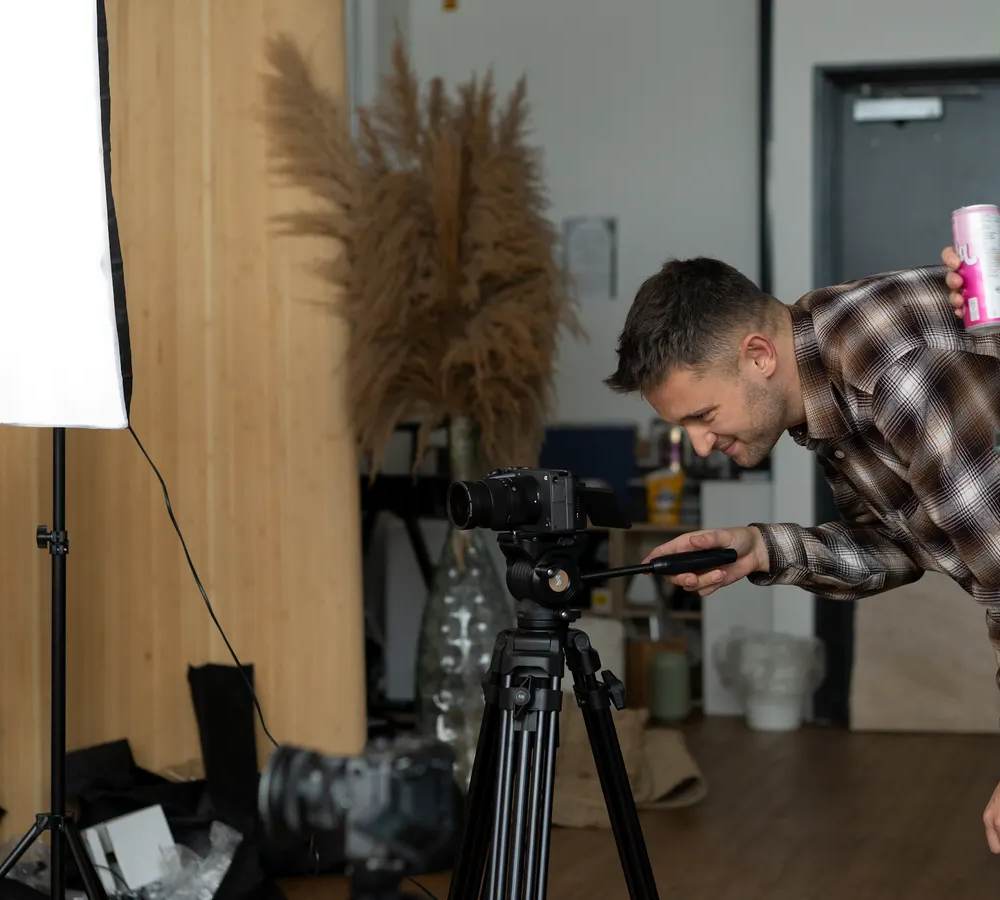
Ask five UK production companies what a corporate video costs and you will get five confident answers spanning £2,000 to £50,000. All five will be telling the truth. That is the problem with the question: "corporate video" covers everything from a testimonial shot in an afternoon to a three-location brand film with a drone unit and a colour grade that takes longer than the shoot did.
So here is the useful version. Typical UK market ranges by video type for 2026, what actually moves the price, how the three main pricing models work, where budgets quietly leak, and the questions that separate a good corporate video production partner from an expensive one. Every figure in this guide is a typical market range, not a quote. Your brief will land somewhere specific once someone competent has interrogated it.
Quick Answer: Typical UK Corporate Video Costs in 2026
If you only read one section, read this one. The table below reflects typical UK market pricing for 2026 across the formats B2B companies most often commission. Treat the ranges as orientation, not gospel: a testimonial with three interviewees across two cities will cost more than a brand film shot in one room.
| Video type | Typical UK range (2026) | What that usually buys |
|---|---|---|
| Brand film | £8,000–£30,000+ | 2–3 minute flagship piece, one to three shoot days, full crew, licensed music, proper grade |
| Customer story / testimonial | £3,000–£10,000 | Half to full day on location, interview plus b-roll, a 2–3 minute edit and social cuts |
| Event video | £2,500–£8,000 per event day | One or two cameras, highlights edit, fast turnaround while the event still matters |
| Animated explainer | £3,000–£15,000 | 60–90 seconds from script to screen; the spread is almost entirely animation complexity |
| Executive thought-leadership series | £8,000–£25,000 per quarter | Recurring format, batch-recorded episodes, cut-downs for LinkedIn and YouTube |
| Training video | £2,000–£8,000 per module | Scripted or presenter-led module, screen capture or studio, captions and versioning |
All figures are typical UK market ranges for 2026, gathered from published rate cards and agency pricing pages, not Earworm client data. Notice what the table cannot tell you: whether any of these is worth commissioning. A £25,000 brand film that nobody distributes is worth less than a £4,000 customer story that sales actually sends to prospects. Hold that thought; it becomes the whole argument later.
What Drives the Cost Up (or Down)
Two quotes for "the same video" can differ by a factor of three. These are the five variables doing the work.
Crew size
A solo shooter-editor might cost £500–£900 a day at typical UK rates. A full crew — director, camera operator, sound recordist, gaffer — runs £2,500–£5,000 a day before kit. Neither is wrong. A CEO interview for LinkedIn does not need a gaffer. A brand film that will open your sales meetings for two years probably does. The waste happens when the crew is sized to the production company's habits rather than the video's job.
Locations
Every additional location adds travel, setup, teardown and risk. One location, one day is the cheapest video you can make. Three locations across two cities can double a budget without adding a second of runtime. If a location does not earn its place on screen, cut it before you cut anything else.
Animation complexity
For explainers, the price is the animation style. Kinetic text and simple 2D motion graphics sit at the bottom of the range; bespoke character animation and 3D sit at the top, and the difference between them can be £10,000 for the same 90-second script. Most B2B explainers do not need characters. They need clarity.
Usage rights
The quiet one. Music licences, presenter fees and stock footage are often priced for a term — one year, one channel, one region. Broaden the usage and the price rises; forget to, and you will pay again in eighteen months when the licence lapses mid-campaign. Always ask what usage is included, in writing.
Editing rounds
Most quotes include two rounds of amends. Round three onwards is billed hourly, and this is where projects with seven stakeholders go to die. The fix is not negotiating more rounds. It is agreeing who signs off before the edit starts.
Day Rate vs Project Fee vs Retainer
UK production pricing comes in three shapes, and the right one depends on whether you are buying a video or building a channel.
| Model | How it works | Best for | Watch out for |
|---|---|---|---|
| Day rate | You pay for crew and kit by the day; edit billed separately, typically £350–£600 per editor day at market rates | Simple, well-defined shoots where you control the brief | Scope lives with you; overruns and re-edits are your cost |
| Project fee | Fixed price for a defined deliverable, amends included | One-off films with a clear spec and single decision-maker | Change requests reprice quickly; vague briefs get padded quotes |
| Retainer | Monthly fee for ongoing production, typically £3,000–£15,000 a month at UK market rates depending on volume | Companies publishing video continuously and treating it as a channel | Only worth it if you will actually feed it; an idle retainer is the most expensive video you never made |
The pattern worth noticing: day rates optimise for flexibility, project fees for certainty, retainers for throughput. Companies that get value from video at scale almost always end up on the third, because the economics of continuous production beat the economics of one-offs. More on that shortly.
Where Corporate Video Budgets Get Wasted
Having priced and produced a lot of B2B video, we can report that budgets rarely die on the shoot day. They die in the decisions around it.
- Flagship money for a single asset. The classic: £20,000 on one brand film, no plan for cut-downs, no distribution budget, 400 views on YouTube. The production was excellent. The investment was not.
- Paying for strategy you did not get. If the first question a production company asks is about camera packages rather than who the video is for and what it should make them do, you are buying execution and improvising the strategy yourself.
- Approval by committee. Every stakeholder added after the brief is signed adds a round of amends. Rounds three to six are usually billed hourly, and they are pure waste: nobody's opinion in round five makes the video perform better.
- Usage rights nobody read. Re-licensing music for the campaign extension nobody anticipated is an avoidable invoice that arrives at the worst time.
- Kit fetishism. Cinema cameras and a jib for a talking head that will be watched on a phone, muted, on a train. Production value should match the platform, not the showreel.
The Content-System Approach: How One Shoot Changes the Maths
Here is where the pricing conversation usually goes wrong. Companies price video as a series of one-off projects — a brand film here, a testimonial there — and each project carries its own strategy, pre-production, crew day and edit. You pay the fixed costs every single time.
The alternative is to treat production as a system. One properly planned shoot day — two executives, a couple of customers, a strong interviewer and a shot list built around questions rather than scenes — can yield a quarter's content: two or three long-form films, a dozen 60–90 second cuts for LinkedIn, vertical clips, quote cards and audio. The shoot costs more than a minimal one. The cost per asset collapses.
This is the same logic that makes B2B podcasting work as a video engine: batch the recording, multiply the outputs. It is why video podcast production and corporate video are converging — a well-run exec series is simply a content system with a recurring format attached, and the interview footage feeds both. You can see the shape of this in our case studies: the recurring shows generate more usable assets per pound than any standalone film we could have made instead.
Nobody's opinion in round five of amends makes the video perform better. Decide who signs off before the edit starts.
The practical implication for budgeting: before you approve a five-figure single film, ask what the same money buys as a system. Often the answer is the same flagship film plus everything else, because the strategy, crew day and location costs were being paid anyway. This is the question we would ask of any corporate video production quote, including ours.
Questions to Ask Before You Sign
Seven questions that take ten minutes and routinely save five figures.
- What is included in the price, itemised? Pre-production, shoot, edit, music licensing, captions, versioning. Vague quotes hide gaps.
- How many rounds of amends, and what does round three cost? Get the hourly rate in writing before you need it.
- What usage rights come with the music, footage and any talent? Term, territory, channels. All of it.
- How many assets will this shoot produce? If the answer is "one", ask why.
- Who owns the raw footage? You want it, or at least guaranteed access. Footage held hostage is a retention strategy, not a service.
- What does distribution look like? A production partner with no opinion on where the video will live is selling you an artefact, not an outcome.
- How will we know it worked? Views are not the answer. Watch time, qualified traffic, assets used by sales, pipeline touched — someone should be able to say which, and how they will measure it.
Any competent production company will answer all seven without flinching. The flinching itself is data.
What to Do With All This
The honest summary: in the UK in 2026 you can get a useful corporate video made for £3,000 and you can spend £30,000 well — but only if the money maps to a job, the rights are read, the sign-off is settled, and the shoot feeds more than one asset. If you are weighing up a project and want a straight answer on what your brief should actually cost, our corporate video production team will tell you — including when the honest answer is to spend less.