What Is a Video Production Agency? (And How to Choose the Right One)
What a video production agency actually does, how it compares with freelancers and in-house teams, and how to choose one that moves pipeline.
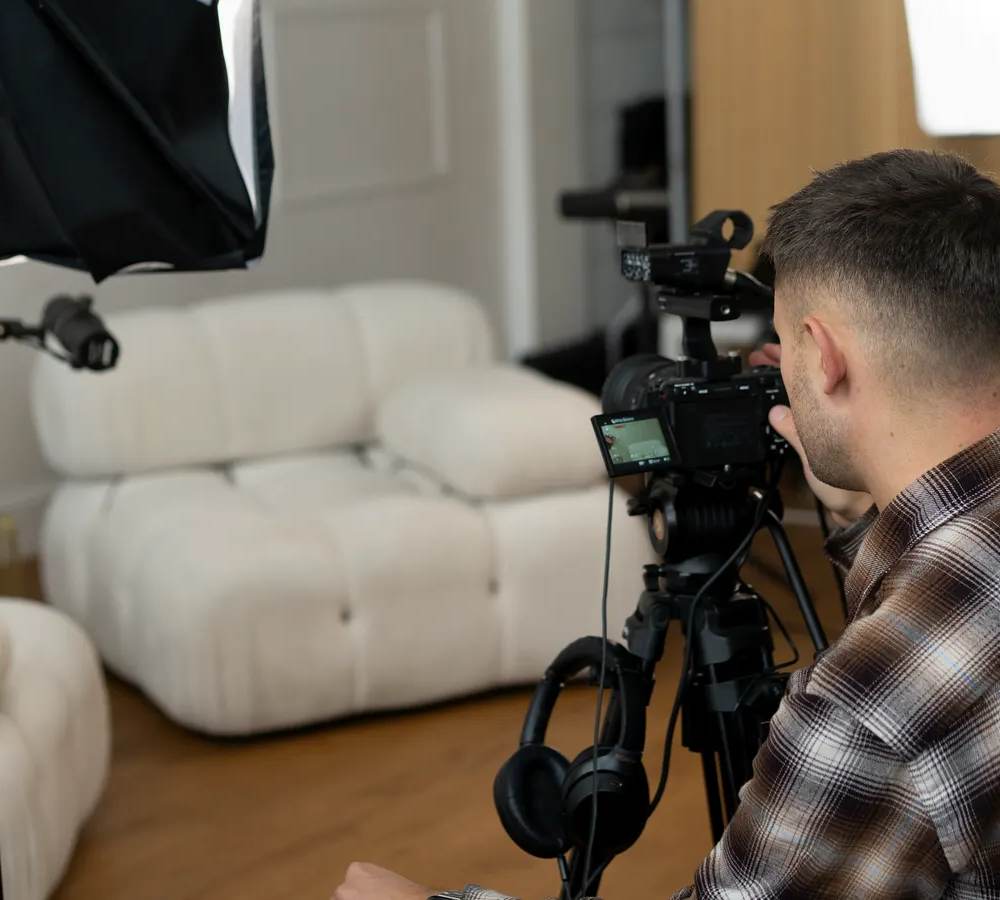
A video production agency is a company that plans, films, edits and delivers video for other businesses. A typical agency handles the full chain: working out what the video is for, scripting it, supplying crew and kit, shooting it, editing it, and handing over finished files sized for wherever they need to go. You hire one when you need video made properly without buying cameras or headcount. That is the definition, and it fits in a sentence. The complication is that it describes hundreds of very different companies, and the difference between them is rarely the quality of the footage.
Almost every established agency can make a good-looking film. What separates them is what they believe happens after the export finishes rendering. This guide covers what agencies actually do, how they compare with freelancers and in-house teams, the trap that absorbs most corporate video budgets, and eight selection criteria built around the only question that matters: will the video do its job.
What a Video Production Agency Actually Does
Every project moves through four stages. The first three are standard across the industry. The fourth is where agencies quietly diverge, and it is the one worth interrogating before you sign anything.
Pre-production
The unglamorous stage that decides everything. Pre-production covers the brief, the audience, the core message, scripting, storyboarding, contributors, locations and the shoot schedule. A good agency spends this stage asking awkward questions: who exactly is this for, what do you need them to do after watching, and how will you know it worked. If those questions never come up, the agency is making a film about you rather than for your buyer, and no amount of cinematography fixes that later.
Production
The shoot itself: crew, cameras, lighting, sound, direction. This is the most visible part of the job and, honestly, the most commoditised. Kit has become cheap and competent operators are plentiful. Production quality still matters — bad audio will sink anything — but it is table stakes, not a differentiator. An agency with a beautiful showreel has cleared a bar that most of the market also clears.
Post-production
Editing, colour grading, sound mix, motion graphics, subtitles and versioning. Post is where a pile of footage becomes an argument. It is also where scope disputes go to breed, so pin down revision rounds and deliverable formats in writing before the shoot, not after it.
Distribution
Where the film meets its audience: platform-native cut-downs, publishing plans, channel strategy, paid promotion, repurposing. Most agencies treat this stage as someone else's problem. The good ones treat it as the point. In B2B especially, corporate video production only earns its budget when the work is engineered to travel — across LinkedIn, YouTube, sales conversations and email — rather than parked on a homepage and admired internally.
Agency vs Freelancer vs In-House
An agency is not the default answer. It is one of three ways to get video made, and each has a job it does well.
| Freelancer | In-house team | Agency | |
|---|---|---|---|
| Typical cost | Lowest: day rates | Highest fixed: salaries plus kit | Mid to high: project fees or retainer |
| Speed to start | Days | Months to build | Weeks |
| Range of skills | One or two disciplines | Whatever you hired for | Full chain, strategy to distribution |
| Strategic input | Usually minimal | Deep company knowledge, narrower craft range | Should be the core of the offer |
| Consistency at volume | Strained past a few projects | Excellent once established | Strong, with capacity flex |
| Best for | Simple, single-format jobs | Brands publishing constantly | High-stakes work and repeatable programmes |
The honest guidance: hire a freelancer for a straightforward job with one deliverable and a clear brief. Build in-house once you are publishing so frequently that agency fees exceed two salaries. Hire an agency when the work carries commercial weight, needs several disciplines at once, or has to keep shipping every month without you managing a crew. Plenty of companies sensibly run a hybrid — an agency for the flagship programme, a freelancer for overflow.
The Shoot-and-Deliver Trap
Here is where most corporate video budgets go to die. A brief goes out, an agency shoots for a day, and six weeks later a polished three-minute film arrives with an invoice. It gets uploaded to the homepage, posted once on LinkedIn, and then nothing. The asset was fine. The model was broken.
Shoot-and-deliver agencies sell films. Content-system agencies sell outcomes, and they plan a shoot day the way a publisher plans an issue: a hero film, yes, but also the vertical clips, the cut-downs by persona, the quote cards, the stills, the sales-deck versions — all mapped to channels before anyone touches a camera. Same day of filming. Radically different yield.
This is the same logic that makes video podcast production such an efficient format: one recording session, planned properly, feeds a month of channel-native content. The principle transfers directly to corporate video. If an agency's proposal ends at "final film delivered", you are buying the first two minutes of a value chain and paying for all of it.
Eight Selection Criteria That Actually Predict Outcomes
Most guides to choosing a video agency list things like "check their portfolio" and "agree a budget", which is advice on a par with "wear clothes to the meeting". These eight criteria are reframed around what the video needs to achieve.
- They ask where the video will live before asking how it should look. If the first conversation is about channels, formats and audiences rather than mood boards, you are in good hands. A distribution plan inside the proposal is the single strongest predictor of return.
- Repurposing is in the scope, not the upsell. One shoot should yield a system of assets. If every cut-down is billed as a separate line item, the economics quietly collapse and you will stop asking for them.
- They can tell you what they would measure. Not "views". Watch time, qualified traffic, use by the sales team, influenced pipeline. Ask what a 90-day report would contain. A shrug now is a shrug later.
- They have proof with buyers like yours. Sector experience matters less than audience experience — an agency fluent in selling to CFOs will adapt to your product faster than a generalist adapts to your buyer. Ask for case studies with outcomes attached, not just pretty links.
- Strategy arrives before storyboards. A good agency will challenge your brief, sometimes to the point of mild irritation. The wrong video, beautifully made, is still the wrong video, and you will have paid twice: once for the film and once in the opportunity it missed.
- The senior people survive the pitch. Ask exactly who will run your account day to day. If the answer changes between the pitch deck and the kick-off call, the pitch was theatre.
- Pricing is scoped, not foggy. Deliverables, formats, revision rounds, music licensing, usage rights — in writing, before the shoot. Ambiguity in a video quote is never accidental and never in your favour.
- The conversation keeps returning to your pipeline. An agency that talks about awards is selling to its peers. An agency that asks what your sales team needs, where your buyers spend attention, and what the video must cause is selling to you.
Red Flags
Some warning signs, collected from watching a lot of briefs go wrong:
- The showreel does all the talking. A reel proves craft, which the whole market has. It proves nothing about strategy, which most of it lacks.
- They promise reach. Anyone who says "this could go viral" in a B2B context is telling you they do not know how B2B attention works.
- No questions about your audience. If the first meeting ends without them asking who watches and why, the film has already failed; it just has not been shot yet.
- Every portfolio piece is a two-minute brand anthem. Sweeping drone shots, piano score, no discernible call to action. Lovely. Also a genre, not a strategy.
- Open-ended day rates and vague deliverables. The quote is small because the scope is missing. It will be found later, at your expense.
- They agree with everything. You are paying for judgement. An agency with no opinions is a very expensive camera rental.
Questions to Ask on a First Call
Take these into the first conversation and the difference between agency types becomes obvious within twenty minutes:
- Where do you think this content should live, and in what formats?
- How would you get more than one asset out of the shoot day?
- What would you measure at 90 days, and what would you expect it to show?
- Who will actually work on our account after the pitch?
- Can you show us a project with a similar buyer and a similar goal, and what it achieved?
- What is included in the price, and what typically costs extra?
- What would you push back on in our brief?
An agency worth hiring will enjoy these questions, because they are the questions it already asks itself. An agency that bristles has just answered all seven.
Choose the System, Not the Showreel
The short version: a video production agency plans, shoots, edits and delivers video for businesses — but the ones worth your budget treat delivery as the halfway point, not the finish line. If you are weighing up partners now, our corporate video production page sets out how we build video as a system: strategy first, one shoot feeding many channels, and measurement your board will actually read. Start there, and bring the seven questions with you.