What Is a Branded Podcast? Definition, Formats and Examples
A branded podcast is a show a brand owns and edits itself, not an ad. The formats, how it differs from sponsorship, how discovery works and how to plan one.
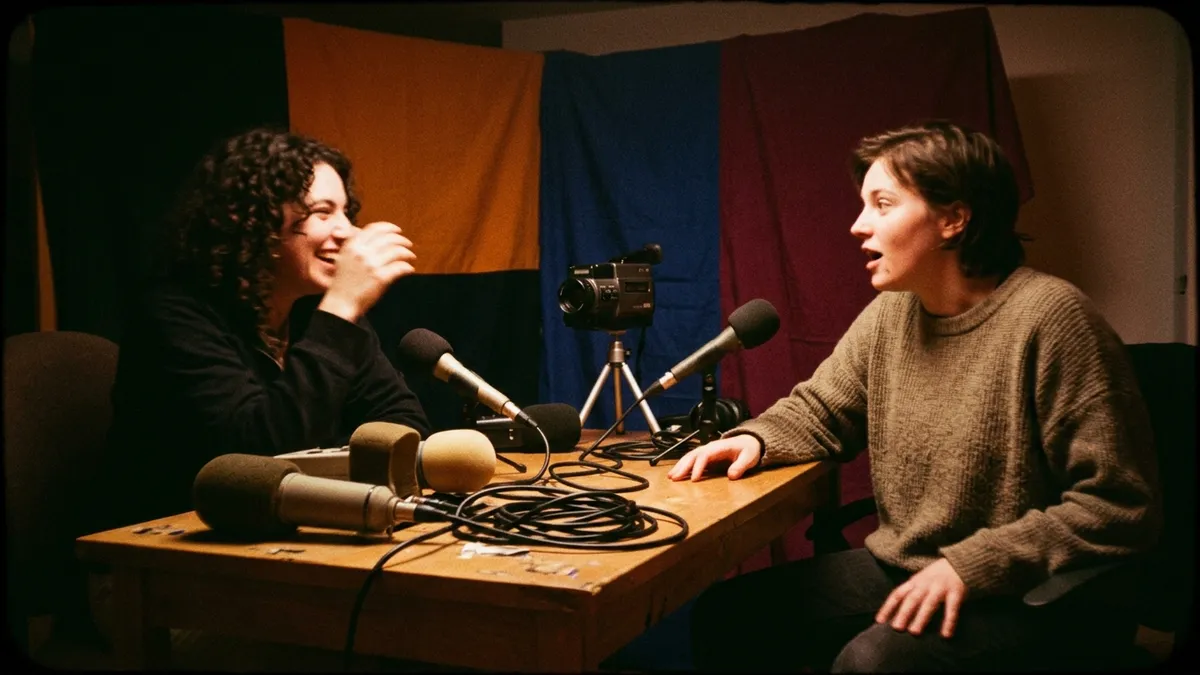
A branded podcast is a show that a brand owns, funds and publishes under its own name, with editorial control over every episode, made to earn an audience rather than interrupt one. That is the whole definition. It is not an advert, not a sponsorship slot on somebody else's show, and not a webinar with a logo on it. The brand is the publisher, the listener gets something genuinely worth their time, and the commercial payoff comes from attention and trust accumulated over a series, not from a call to action at minute twelve.
This guide covers how a branded podcast differs from sponsoring or guesting, the four formats that work, why companies commit to them, how discovery actually happens in 2026, how to plan one properly, and six examples from shows we produce. The sibling piece on what a B2B podcast is goes deeper on pipeline.
Branded Podcast vs Sponsorship vs Guesting
Most confusion about branded podcasts comes from lumping three different things together because they all involve a microphone. Podcast advertising works: Edison Research reports that 76% of weekly US podcast consumers have acted as a result of hearing a podcast ad, and in the UK 83% of weekly listeners agree ads are a fair price for free content. But an ad rents an audience for thirty seconds. A branded podcast builds one you keep.
| Branded podcast | Sponsorship / host-read ads | Guesting on other shows | |
|---|---|---|---|
| Editorial control | Total: topics, guests, tone, format | Script or talking points only | None beyond your own answers |
| Cost model | Production retainer, fixed per episode | CPM or flat fee per slot, repeats every flight | Mostly time, sometimes a booking agency fee |
| Audience ownership | Yours: feed, subscribers, YouTube channel, data | The host's; it leaves when the spend stops | The host's |
| Time to results | Slow to start, compounds over 6 to 18 months | Fast, flight by flight | Fast per appearance, no compounding |
| Best for | Authority, owned reach, long sales cycles, executive audiences | Direct response, promo codes, launches | Founder profile, backlinks, early-stage credibility |
The honest read is that these are complementary, not rivals. Plenty of brands run a show of their own and still buy slots elsewhere, and guesting is a sensible way to test whether an executive can actually hold a conversation before you build a series around them. The mistake is expecting a branded podcast to behave like an ad campaign. It will not deliver a spike in week one, and it should not be judged as if it were meant to.
What Are the Main Branded Podcast Formats?
Nearly every branded podcast falls into one of four shapes. Pick on purpose, because the format decides your production cost, your guest pipeline and what the show can credibly promise.
Interview
A host from the brand, or a hired presenter, talks to guests the target audience wants to hear from. This is the default for good reason: the guest brings expertise and often distribution, the recording is a single session, and a video-first setup turns one conversation into a full episode plus a week of clips. The risk is sameness: if it could be any company's interview show, it is building the category rather than you.
Narrative
Scripted, documentary-style episodes with a storyline, multiple voices and heavier post-production. Narrative shows are the most memorable format and the most expensive per minute, and they suit brands with a big idea to explore rather than a product to explain. Seasons tend to be short and deliberate.
Customer story
Real customers talking about real problems, with the brand as the context rather than the hero. This is the case study rebuilt as something people will actually consume, and it works hardest when the conversation is allowed to include what went wrong. It doubles as sales enablement.
Internal
Made for employees rather than the market: leadership updates, onboarding, culture, change programmes. Nobody outside the company hears it, so the measurement is completion and sentiment rather than downloads. Some brands publish a public-facing version as an employer brand podcast, which sits between internal and interview.
Why Do Brands Make Podcasts?
Three reasons come up in almost every brief we see, and they are worth separating because they call for different shows.
An owned audience. Rented reach is getting dearer and less predictable. A podcast feed, a YouTube channel and an email list are channels a brand controls, and the audience on them is reachable next quarter without a new media budget. UK listening keeps growing to meet that: Ofcom's Media Nations 2026 puts weekly podcast listening at 27% of UK adults, up from 7% a decade ago, and RAJAR's MIDAS Spring 2026 study counts around 93 million hours of podcast listening in an average week, at roughly 6.4 hours per listener.
Executives listen. For B2B brands, the attraction is who is on the other end of the headphones. Signal Hill Insights, analysing Triton's Podcast Metrics Demos+ data, found that among senior executives at organisations with 500 or more staff, 83% had listened to a podcast in the past week, against 66% of other monthly listeners, and that they were more than twice as likely to be power listeners consuming five or more hours a week. That is the audience a thought leadership podcast is built to reach.
Thought leadership changes buying behaviour. The Edelman-LinkedIn B2B Thought Leadership Impact research found that 75% of decision-makers and C-suite executives say a piece of thought leadership has led them to research a product or service they were not previously considering, and roughly nine in ten are more receptive to sales outreach from a company that consistently produces high-quality thought leadership. A podcast is one of the few formats that can deliver "consistently" without exhausting the people in it.
How Do People Discover Branded Podcasts Now?
Discovery is where most branded podcast strategies are out of date. The instinct is to launch on Apple and Spotify and wait for the charts. The data says the audience arrives from elsewhere.
In the UK, RAJAR MIDAS Spring 2026 puts word of mouth first at around 28% of listeners, followed by social media at roughly 24%, with YouTube at about 16% and in-app suggestions and charts at about 17%. Outside advertising barely registers. Read that as a production brief: the show has to be good enough to recommend, with clips that travel on social.
In the US the picture is even more pointed. The Sounds Profitable Podcast Discovery Playbook 2026 found that 40% of listeners discovered their favourite show on YouTube, far ahead of any other source, and that 78% of YouTube podcast users find shows by searching. The same study reports organic discovery beating paid by roughly two to one. If your audience is international, or simply under 45, a branded podcast without a video edition is invisible to the biggest discovery engine there is. That is the practical case for video podcast production.
Ofcom's UK numbers point the same way: 68% of weekly listeners now listen to podcasts that also have video, rising to 79% among 16 to 34s, and 44% say video makes podcasts more engaging.
Branded Podcast Strategy: How to Plan One
A branded podcast strategy is six decisions made in order. Most failed shows skipped one of them, usually the first.
1. Goal
One primary job. Authority with a defined buyer, pipeline from a named segment, employer brand, category education, retention of existing customers. A show built to do everything is a show nobody can judge, and therefore nobody renews.
2. Audience
Who, specifically, and what do they already listen to? Two hundred of the right finance directors beat twenty thousand general business listeners. Define the audience tightly enough that you could name ten real people in it, then write the show for them.
3. Format and host
Choose from the four formats above, then choose the host with the same seriousness. The host is the show. An in-house executive with warmth and curiosity is ideal; one who reads questions off a sheet is a liability, and a professional presenter is the better call.
4. Cadence and seasons
Weekly or fortnightly, in seasons of eight to twelve episodes. Seasons give you natural review points and protect you from the slow fade that kills most corporate shows at episode seven.
5. Distribution
Plan this before you record, not after. Full episodes on YouTube and every audio app, a clip programme for LinkedIn and short-form video, a newsletter, and guests briefed and equipped to share. Our guide to growing a podcast covers the mechanics, and a podcast marketing agency can run the whole layer if the in-house team is already stretched.
6. Measurement
Decide the numbers before episode one. Downloads and views for reach; completion and retention for quality; named accounts, site visits, gated downloads and sales conversations for commercial impact. The podcast ROI piece sets out a model that finance teams will accept.
A branded podcast is not a campaign with a microphone. It is a publication, and it has to be run like one.
Branded Podcast Examples from Earworm Shows
These are shows we produce. They are described as they are, without invented numbers, because the interesting part is the strategic choice behind each. For a wider view of what other companies are doing, see our round-up of corporate podcast examples.
- The CFO Playbook (Soldo). An interview show for CFOs and finance leaders, built to position a spend-management platform at the centre of the conversations its buyers already have. Guests are senior finance people; the product stays in the background.
- The Art of Investing (IG). A weekly show from the trading and investment platform that makes market topics accessible and engaging for a broad audience, with presenters who bring market knowledge rather than a sales script.
- No Stress (Pulsetto). A video-first show pairing expert guests with a consistent stress fitness narrative. The podcast was part of reframing Pulsetto from a wellness gadget into a stress resilience platform for high performers.
- US-UK Tax Talk (Collyer Bristow). A law firm's cross-border tax podcast that simplifies UK and US tax rules for international businesses and individuals. Niche by design: a small audience with a very high value per listener, and a format that lets partners demonstrate expertise rather than assert it.
- Pretty Covered (Polly). A monthly in-person video and audio show built around real-life stories, made to make life insurance feel human and to build trust with an audience that does not want to think about protection. Customer-story format, with full guest sourcing and media coaching behind it.
- Dig In (Wenodo). A deep-dive show exploring food tech and sustainable agriculture ventures. A category-education play: the brand earns a seat in an emerging market by being the place its conversations happen.
Six shows, four formats, six different goals. None of them is a podcast about the company that pays for it, and that is not a coincidence.
FAQs
What is a branded podcast?
A branded podcast is a series owned, funded and published by a brand, with full editorial control, made to build an audience rather than to run as advertising. The brand is the publisher. The content has to stand on its own merits, and the commercial return comes from trust and attention built over time.
How is a branded podcast different from sponsoring a podcast?
Sponsorship buys a slot in someone else's show: you get reach quickly, you influence only your own message, and the audience belongs to the host. A branded podcast costs more up front and starts slower, but the feed, the subscribers, the YouTube channel and the data are yours, and the value compounds rather than resetting with every media flight.
How much does a branded podcast cost?
It depends on format, cadence and how much of the work you do in-house. In the UK market, a simple remotely recorded interview show edited by a freelancer can run to a few hundred pounds an episode, while a fully produced video podcast with studio recording, editing, clips, distribution and reporting from an agency is typically several thousand pounds per episode, and narrative shows sit above that. Treat the budget as an annual publishing line, not a one-off project.
How long before a branded podcast works?
Expect early signals, such as guest engagement, clip performance and inbound mentions, within the first season, and meaningful audience and pipeline effects over six to eighteen months. Shows judged on three episodes are usually cancelled before they had a chance; shows run in seasons with review points survive long enough to compound.
Do branded podcasts need video?
For most brands, yes. YouTube is the single biggest discovery source for podcasts in the US and a fast-growing one in the UK, and over two-thirds of UK weekly listeners already listen to shows that have video. Video also produces the clips that drive social discovery. Audio-only can work for a narrow, established audience, but it forfeits the main way new listeners arrive.
How do you measure the success of a branded podcast?
Set three layers. Reach: downloads, views and subscriber growth. Quality: completion rate, retention and returning listeners. Commercial: site visits, gated downloads, named accounts engaging, sales conversations that reference the show, and guests who became relationships. Agree in advance which one the show is primarily for.
Start a Branded Podcast That Earns Its Audience
Earworm is a B2B video podcast agency with a studio in Bristol and partner studios across London. We take branded podcasts from strategy to launch, covering B2B podcast production, video, distribution and measurement, with shows typically live in four to eight weeks. Explore our podcast production services, or get in touch and we will tell you which format suits the job.